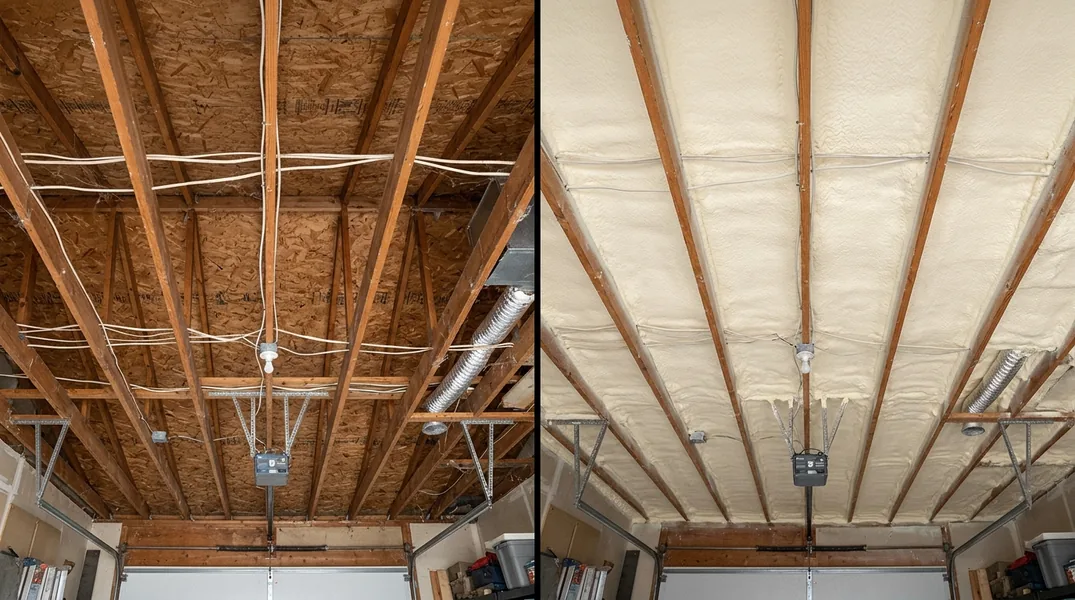
Why Permits Matter for Spray Foam Installation
If you're planning to install Attic Spray Foam Insulation in your Oshkosh home, one of the first questions you should ask is whether you need a permit. The short answer is yes, most spray foam insulation projects require a building permit from your local municipality. This isn't a bureaucratic hurdle meant to slow you down; it's a safety requirement designed to protect your home and ensure the work meets Wisconsin building codes.
Permits exist because spray foam insulation affects your home's structural integrity, moisture management, and fire safety. When foam is installed incorrectly, it can trap moisture, create condensation problems, or fail to meet fire-rating requirements. Building inspectors verify that your contractor is licensed, that materials meet code standards, and that installation techniques are sound. Skipping the permit process might save time upfront, but it can void your homeowner's insurance, create problems when you sell, and leave you liable if something goes wrong.
Open Cell vs. Closed Cell Spray Foam: Understanding the Difference
Before you pull a permit, you need to understand what type of spray foam you're installing, because permit requirements and building code compliance often depend on it. The two main categories are Open Cell Spray Foam Insulation and Closed Cell Spray Foam Insulation, and they perform very differently.
Open cell spray foam is lighter and more flexible. It's called 'open cell' because the bubbles in the foam aren't completely sealed, allowing air and moisture to pass through. This type typically has an R-value of about 3.5 to 3.8 per inch, making it less efficient than its counterpart. However, it's more affordable and allows your home to breathe, which can be advantageous in certain climates. Open cell foam is often used in attics and interior walls where moisture management is important. Because it's more permeable, it doesn't create as much of a vapor barrier, so building inspectors in Oshkosh may have different approval criteria for open cell applications compared to closed cell.
Closed cell spray foam has a much higher R-value, typically between 6 and 7 per inch. The cells are completely sealed, creating a dense, rigid foam that acts as both insulation and a vapor barrier. This superior closed cell spray foam R value makes it ideal for basements, crawl spaces, and exterior walls where moisture resistance is critical. Closed cell foam is more expensive but offers better long-term protection and superior energy efficiency. Its structural strength also means it can contribute to wall bracing in some applications.
Building Code Requirements in Oshkosh and Wisconsin
Wisconsin follows the International Building Code (IBC), which sets minimum standards for insulation installation, fire safety, and ventilation. When you apply for a permit in Oshkosh, your building inspector will check that your spray foam project complies with these codes. One of the most important considerations is fire rating. Spray foam is combustible, so the IBC requires that foam be covered with a thermal barrier (usually drywall) in certain applications, particularly in living spaces and basements. The specific requirements depend on whether you're using open cell or closed cell foam, the thickness applied, and where it's being installed.
Another critical code issue is ventilation. If you're installing foam in your attic, the code may require that you maintain proper air space and ventilation paths to prevent moisture buildup and protect your roof structure. This is where working with an experienced contractor becomes essential. They understand how to design the installation so it meets code while still delivering maximum energy efficiency. Your permit application will include details about ventilation plans, foam type, thickness, and coverage area, all of which the inspector will verify before and after installation.
What Information You'll Need When Applying for a Permit
When you contact your local building department in Oshkosh to apply for a permit, be prepared to provide specific information about your project. You'll need detailed plans showing where the foam will be applied, the type of foam (open cell or closed cell), the thickness in inches, the total square footage, and how it will be protected or covered. You'll also need the name and license number of the contractor who will perform the work, proof of liability insurance, and sometimes a detailed installation plan that explains how the contractor will ensure code compliance.
Many contractors handle the permit process for you, which is one reason it's worth getting a free estimate from a professional rather than attempting DIY installation. When you call Oshkosh Spray Foam Insulation at (920) 744-3095, our team can walk you through what's required, help you understand the differences between foam types, and manage the permitting process. Having a insured contractor on your side makes the entire process smoother and ensures your project will pass inspection the first time.
Spray Foam R-Value and Energy Code Compliance
Energy codes in Wisconsin specify minimum R-values for different parts of your home depending on the climate zone. Your attic insulation, for example, typically needs to meet an R-30 to R-49 requirement depending on the specific code year and application. Understanding spray foam R value is crucial because it directly affects whether your installation will meet these requirements. With open cell foam at 3.5 to 3.8 per inch, you'd need 8 to 14 inches to meet typical attic requirements. With closed cell spray foam R value at 6 to 7 per inch, you'd only need 5 to 8 inches of material to achieve the same insulation level.
This is why closed cell foam, despite its higher upfront cost, often delivers better value over time. It takes up less space, provides superior moisture protection, and helps you meet code requirements with thinner application. When your building inspector reviews your permit, they'll verify that your foam type and thickness will achieve the required R-value for your specific application. If you're unsure which type is right for your home, our specialists can help you make an informed decision based on your attic configuration, local climate, and budget.
Getting Started: Your Next Steps
The permit process doesn't have to be intimidating. The key is starting with a clear understanding of your project, the foam type you'll use, and the local requirements. If you're ready to move forward with Attic Spray Foam Insulation or exploring Wall & Injection Foam Insulation for your home, the best first step is to contact a licensed local contractor who understands Oshkosh building codes inside and out.
Oshkosh Spray Foam Insulation has been helping homeowners navigate these decisions and get their projects permitted and installed correctly. We'll provide a detailed free estimate that outlines the foam type we recommend, the R-value you'll achieve, the expected cost, and what to confirm with your building department. Call us today at (920) 744-3095 to discuss your project and learn how spray foam can improve your home's energy efficiency while meeting all local code requirements.
Looking for a professional spray foam insulation contractor in Oshkosh? Oshkosh Spray Foam Insulation responds fast for all your spray foam insulation needs.
Get a Free Quote