Understanding Spray Foam Insulation Types
When it comes to improving your home's energy efficiency, attic spray foam insulation has become one of the most effective solutions for homeowners in Oshkosh and surrounding areas. Spray foam insulation works by expanding and hardening to create an airtight seal that prevents heat loss and air infiltration. However, not all spray foam is created equal. The two primary types, open cell and closed cell, have distinct characteristics that affect how they perform in different applications.
Understanding the differences between these two types is crucial before making a decision for your home. Both options provide superior insulation compared to traditional fiberglass batts or blown-in cellulose, but they excel in different scenarios. Your choice will depend on your specific needs, your home's construction, your budget, and your climate concerns. In Oshkosh, where winters are cold and humidity can be a concern, selecting the right spray foam type can make a significant difference in your comfort and energy bills.
What Is Open Cell Spray Foam Insulation?
Open Cell Spray Foam Insulation has a lower density structure where the cells are not completely enclosed. Think of it like a sponge with tiny pockets that allow air and moisture to pass through the material. This characteristic gives open cell foam several unique properties that make it suitable for certain applications. It expands significantly after application, allowing it to fill irregular cavities and hard-to-reach spaces with ease. The material is also softer and more flexible than its closed cell counterpart, making it easier to cut and trim during installation.
One of the primary advantages of open cell foam is its lower cost. Because it requires less material and is simpler to apply, homeowners can achieve quality insulation at a more budget-friendly price point. Open cell foam also has excellent acoustic properties, making it a popular choice for soundproofing rooms and reducing noise transmission. However, the open structure means it absorbs moisture more readily, which is an important consideration for certain areas of your home. Open cell foam typically has an R-value between R-3.5 and R-3.8 per inch, which is respectable but lower than closed cell options.
What Is Closed Cell Spray Foam Insulation?
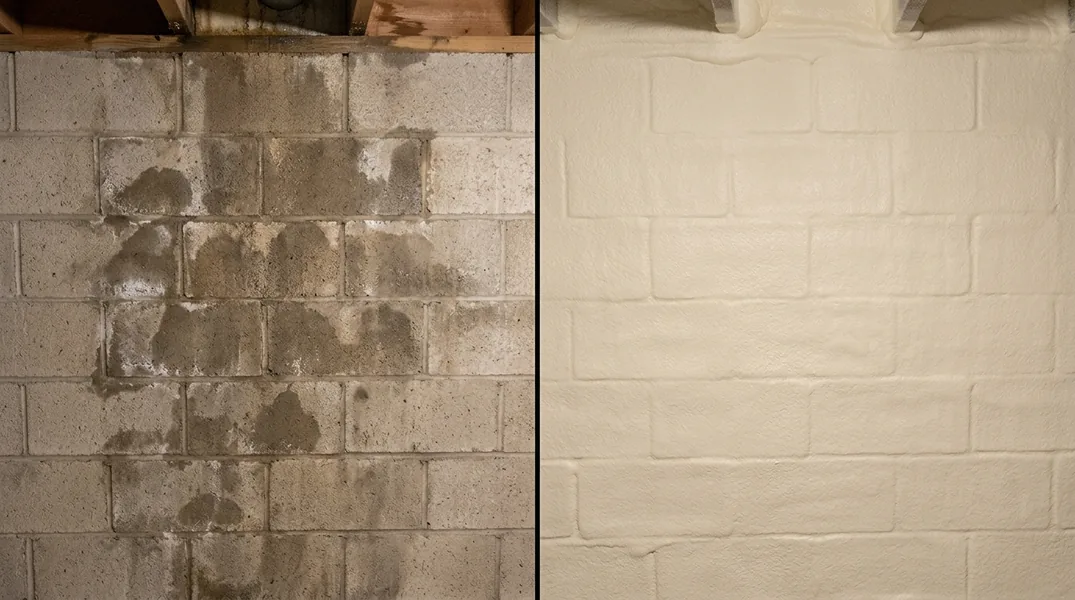
Closed Cell Spray Foam Insulation has a denser structure where the cells are completely enclosed and packed tightly together. This creates a more rigid, moisture-resistant barrier that provides superior insulation performance. The closed cell structure means that air and water vapor cannot easily penetrate the foam, making it an excellent choice for areas prone to moisture exposure or where vapor barriers are critical. This type of spray foam is also more durable and provides better structural support to walls and roofs.
The primary advantage of closed cell foam is its higher R-value, typically ranging from R-6 to R-7 per inch. This means you need less thickness to achieve the same insulation performance as open cell foam. Closed cell foam also provides an excellent air seal and acts as a vapor barrier, which is particularly valuable in attics and crawl spaces. The trade-off is that closed cell foam costs more than open cell, both in material and installation. However, for homeowners prioritizing maximum energy efficiency and moisture protection, the investment often pays for itself through reduced heating and cooling costs over time.
Sealed Attic Insulation: Which Type Performs Better?
For attic applications, the choice between open cell and closed cell becomes particularly important. A sealed attic insulation approach creates what's known as an unvented attic, where the insulation is applied to the underside of the roof deck rather than the attic floor. This method has gained popularity because it prevents heat loss through the roof, reduces ice dam formation, and keeps your attic temperature closer to your living space temperature. Both open and closed cell foams can be used for this application, but they offer different benefits.
Closed cell foam is generally preferred for unvented attics because it provides superior moisture control and a more complete air seal. Since your attic will be warmer and potentially experience more humidity in winter, the moisture-resistant properties of closed cell foam protect your roof structure from potential damage. Additionally, the higher R-value means you achieve better insulation with less material thickness, which is important in attics with limited space. Open cell foam can work in attics, but it requires careful attention to ventilation and moisture management. Many building codes actually recommend closed cell foam for unvented attic spray foam applications to ensure long-term performance and durability.
Attic Spray Foam Insulation Cost in Oshkosh: What to Budget
Cost is understandably a major factor when homeowners consider spray foam attic insulation projects. Open cell spray foam typically costs between $0.50 and $1.00 per board foot, while closed cell foam ranges from $1.00 to $1.50 per board foot. For an average attic space of 1,000 square feet, you might expect to spend anywhere from $1,500 to $3,000 for open cell or $2,000 to $4,500 for closed cell, depending on the thickness applied and your specific attic configuration.
When evaluating pricing, remember that this is an investment in your home's long-term energy efficiency. Many homeowners see their energy bills drop by 15 to 20 percent after installing quality spray foam insulation. Additionally, improved comfort, better moisture control, and potential increases in home value should factor into your decision. Rather than choosing based on price alone, consider the long-term return on investment and the specific needs of your home. Oshkosh Spray Foam Insulation can provide you with a detailed free estimate that breaks down the costs and benefits for your particular situation.
Making Your Decision: Which Is Right for Your Home?
Choosing between open cell and closed cell spray foam depends on several factors specific to your home and situation. If you're primarily concerned with cost and your attic has adequate ventilation potential, open cell foam might be the right choice. It works well for interior wall insulation and applications where moisture isn't a major concern. However, if you're creating an unvented attic, dealing with moisture issues, or want maximum energy efficiency, closed cell foam is typically the better investment.
Consider your home's location, age, and current condition. Older homes in Oshkosh may have different moisture profiles than newer construction, which affects which foam type performs best. Also think about your long-term plans for your home. If you plan to stay for many years, the superior performance and durability of closed cell foam may justify the higher upfront cost. The best way to make an informed decision is to consult with experienced professionals who understand local building conditions and can assess your specific needs. Contact Oshkosh Spray Foam Insulation at (920) 744-3095 to discuss your project with our team and receive personalized recommendations based on your home's unique requirements.
Looking for a professional spray foam insulation contractor in Oshkosh? Oshkosh Spray Foam Insulation responds fast for all your spray foam insulation needs.
Get a Free Quote