Why Mid-Century Ranches in Winnebago County Need Insulation Upgrades
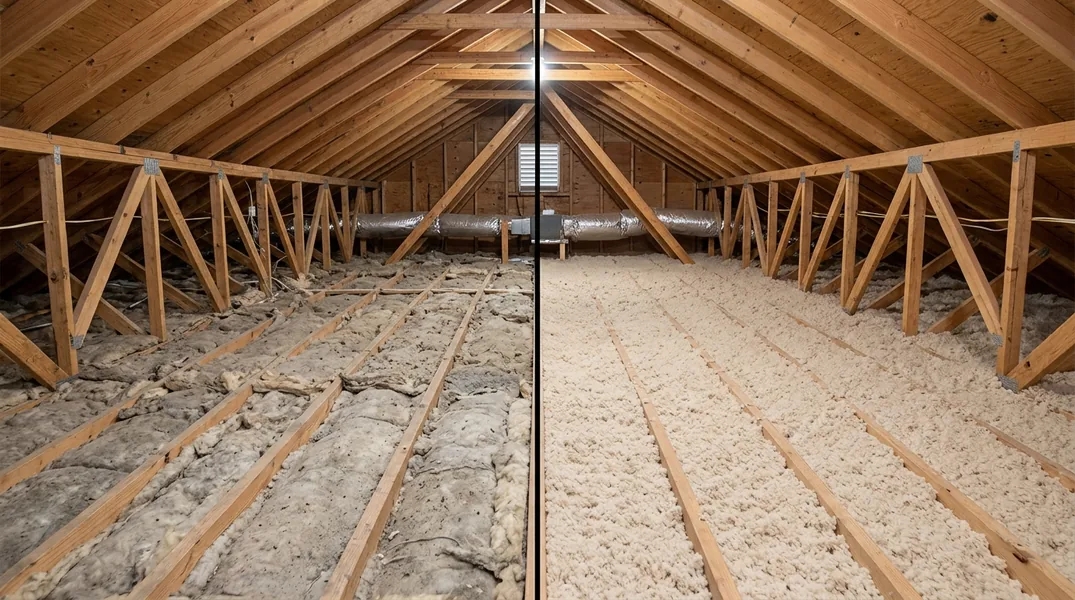
Mid-century ranch homes built between the 1950s and 1970s have a special place in Oshkosh and throughout Winnebago County. These single-story, open-concept designs represented the American dream for thousands of families. However, what made them charming and efficient for their era has become a liability today. Most of these homes were insulated with materials that have since degraded, settled, or simply don't meet modern energy efficiency standards.
The attics of these vintage ranches often contain loose-fill fiberglass, mineral wool, or cellulose that has compressed over decades. Settling reduces the effective R-value significantly, meaning your heating and cooling system works harder to maintain comfort. Homeowners in Neenah, Menasha, and Fox Crossing have discovered that upgrading their attic insulation can reduce energy bills by 15 to 20 percent annually. The Wisconsin winters demand superior thermal performance, and outdated insulation simply cannot deliver it.
Spray Foam vs Blown-In Insulation: Which Wins for Attics?
When comparing Attic Spray Foam Insulation to blown-in cellulose or fiberglass, the differences are striking. Blown-in insulation relies on air pockets trapped within loose fibers to resist heat transfer. Over time, these materials settle, compact, and lose effectiveness. Spray foam, by contrast, expands to fill every gap and crack in your attic, creating a continuous thermal barrier that doesn't settle or compress.
Blown-in insulation is cheaper upfront, which appeals to budget-conscious homeowners. However, it requires regular maintenance and eventual replacement as it deteriorates. Spray foam may cost more initially, but it provides superior air sealing and maintains its R-value for decades. The material adheres to framing, rafters, and irregular surfaces that blown-in products simply cannot reach effectively. For mid-century ranch homes with older roof structures and potential air leaks, spray foam delivers measurably better performance.
Spray Foam vs Fiberglass: Performance in Wisconsin Winters
Fiberglass batts and rolls have been the standard insulation choice for generations. They're easy to install and inexpensive, which explains their popularity in homes built during the 1950s through 1970s. However, fiberglass has inherent limitations that become apparent in harsh climates like Wisconsin. The material allows air infiltration around edges and gaps, and moisture can degrade its performance over time.
Spray foam, whether Closed Cell Spray Foam Insulation or Open Cell Spray Foam Insulation, creates an airtight seal that fiberglass cannot match. Closed-cell foam provides higher R-value per inch and adds structural rigidity to your roof system. Open-cell foam offers excellent sound dampening and slightly lower cost while still delivering superior air sealing compared to fiberglass. For mid-century ranches facing another 30 to 50 years of Wisconsin weather, the performance gap is substantial and measurable on your heating bills.
The Best Insulation for Attic: Why Spray Foam Leads the Field
Determining the best insulation for attic spaces requires evaluating multiple factors: R-value per inch, air sealing capability, moisture resistance, longevity, and energy savings. Spray foam excels in every category. Unlike cellulose, which absorbs moisture and can support mold growth, spray foam resists water intrusion. Unlike blown-in fiberglass, which settles and leaves voids, spray foam maintains consistent density and thermal performance indefinitely.
The air sealing property of spray foam is particularly valuable in older ranch homes. These houses typically have numerous small gaps and cracks around ductwork, electrical penetrations, and roof framing that allow conditioned air to escape. Blown-in and fiberglass insulation cannot seal these leaks. Spray foam expands into every void, eliminating air infiltration that would otherwise cost you hundreds of dollars annually in wasted heating and cooling. For homeowners serious about energy efficiency and comfort, spray foam represents the clear winner among available options.
Spray Foam vs Cellulose: Durability and Moisture Concerns
Cellulose insulation, made from recycled paper, appeals to environmentally conscious homeowners and offers decent thermal performance initially. However, cellulose presents significant challenges in attic applications, particularly in Wisconsin's humid summers and long cold winters. The material absorbs moisture readily, which reduces its R-value and creates conditions favorable for mold and mildew growth. Once cellulose becomes damp, it loses structural integrity and can sag or settle unevenly.
Spray foam, by contrast, is inherently moisture-resistant. Closed-cell spray foam actually sheds water and provides vapor barrier properties. Even open-cell spray foam, which is more permeable, resists the absorption problems that plague cellulose. In attic spaces where ventilation may be compromised or where roof leaks are a possibility, spray foam provides peace of mind that cellulose cannot offer. The durability advantage translates into decades of reliable performance without the maintenance concerns that come with cellulose insulation in damp climates.
Attic Spray Foam Insulation Cost in Oshkosh: What to Budget
Understanding the investment required for Attic Spray Foam Insulation helps homeowners make informed decisions. Spray foam typically costs between 1.50 and 3.00 dollars per board foot, depending on whether you choose open-cell or closed-cell formulation and the complexity of your attic space. For a typical 1,500 square-foot attic, budget between 2,000 and 5,000 dollars for complete coverage. This higher upfront cost concerns many homeowners until they calculate the long-term savings.
The energy savings from spray foam insulation often exceed 20 percent on annual heating and cooling costs. For a homeowner spending 2,000 dollars annually on utilities, that's 400 dollars in savings every year. Over a 30-year period, the insulation pays for itself many times over, while simultaneously improving comfort and home value. Oshkosh Spray Foam Insulation offers transparent pricing and can provide a detailed estimate based on your specific attic dimensions and condition. Call (920) 744-3095 or request a free estimate to learn the exact investment required for your mid-century ranch home.
Getting Started: Attic Spray Foam Insulation Near Me
If you own a mid-century ranch in Winnebago County and suspect your attic insulation is underperforming, professional evaluation is the logical first step. Oshkosh Spray Foam Insulation serves Oshkosh and surrounding communities with expert installation of spray foam solutions tailored to your home's specific needs. Our team assesses your current insulation, identifies air leaks, and recommends the optimal spray foam type and coverage for maximum energy efficiency.
The installation process is straightforward and typically completed in a single day. Technicians prepare your attic, apply the spray foam using professional-grade equipment, and verify complete coverage. You'll notice improved comfort immediately, with more consistent temperatures throughout your home and elimination of drafts. To schedule your consultation and learn how spray foam can transform your home's energy performance, contact Oshkosh Spray Foam Insulation at (920) 744-3095 or visit https://oshkosh-spray-foam.com to request your free estimate today.
Looking for a professional spray foam insulation contractor in Oshkosh? Oshkosh Spray Foam Insulation responds fast for all your spray foam insulation needs.
Get a Free Quote