Understanding R-Value and Your Attic's Current State
When homeowners in Oshkosh think about improving their attic insulation, the conversation usually centers on one critical number: R-value. This measurement tells you how well a material resists heat flow. The higher the R-value, the better the insulation performance. But here's where many homeowners get confused: knowing your current R-value and understanding what Wisconsin actually requires are two different things.
Before deciding between air sealing and full Attic Spray Foam Insulation, you need to assess what you're working with. Many older homes in the Oshkosh area have attics with minimal insulation, fiberglass batts that have settled over decades, or gaps where insulation never existed at all. A professional inspection can reveal these problem areas quickly. The spray foam insulation R value per inch typically ranges from 3.5 to 7 depending on whether you choose open cell or closed cell foam, making it significantly more efficient than traditional fiberglass batts in tight spaces.
R Value Requirements by State: What Wisconsin Expects
Wisconsin building codes establish specific R value requirements by state for attic insulation, and understanding these standards is essential for any homeowner considering an upgrade. The current recommendation for attics in Wisconsin is R-38 to R-49, depending on your specific climate zone and heating degree days. This might sound high, but it reflects the reality of our cold winters and the importance of keeping conditioned air inside your home where it belongs.
If your current attic insulation falls short of these standards, you have two main paths forward. The first is straightforward air sealing combined with topping up existing insulation to meet the minimum R-value threshold. The second is a complete spray foam solution that addresses both air leakage and insulation in one application. For homeowners in Neenah and surrounding communities, meeting these state requirements isn't just about comfort. It directly impacts your energy bills, your home's resale value, and your eligibility for certain energy-related tax incentives.
When Air Sealing Alone Gets the Job Done
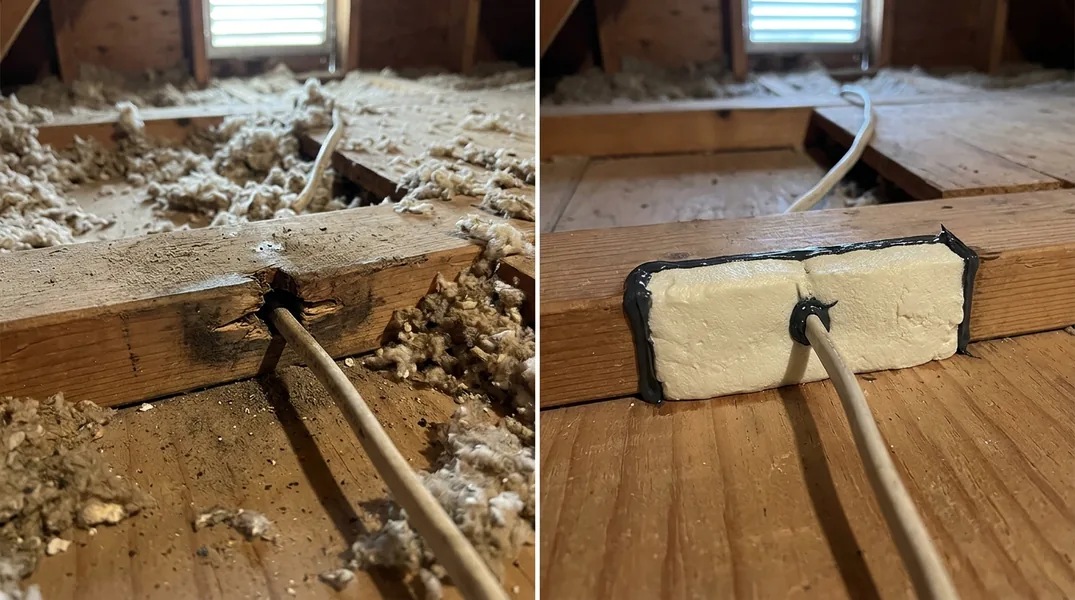
Air sealing is the practice of identifying and closing gaps, cracks, and holes where conditioned air escapes from your home. This includes sealing around penetrations like electrical outlets, ductwork, plumbing, and the attic access hatch. The beauty of air sealing is that it's often affordable and highly effective, especially if your existing insulation is already reasonably close to meeting state R-value requirements.
If your attic currently has R-30 insulation and you're in a zone requiring R-38, adding four to six inches of fiberglass batts or blown-in cellulose on top, combined with professional air sealing, might be sufficient. This approach works well when your existing insulation is in good condition, hasn't settled significantly, and covers most of the attic floor. The cost is lower than a full foam application, and for some homeowners, the energy savings and comfort improvement justify stopping there rather than investing in complete spray foam coverage.
However, air sealing alone has limits. If your attic has major structural gaps, if existing insulation is compressed or missing in patches, or if you want maximum efficiency and long-term protection, topping up with air sealing becomes a temporary fix rather than a permanent solution. Many homeowners discover this the hard way when they realize their energy bills haven't improved as much as expected.
The Case for Full Spray Foam Insulation: Complete Coverage and Control
Attic Spray Foam Insulation offers something that traditional insulation and air sealing cannot: complete, seamless coverage that seals and insulates simultaneously. Whether you choose Open Cell Spray Foam Insulation for a more budget-friendly option or Closed Cell Spray Foam Insulation for superior moisture resistance and higher R-value, spray foam expands to fill every cavity and crevice. This eliminates thermal bridging, the phenomenon where heat escapes through studs, joists, and other structural elements that traditional insulation cannot fully cover.
How thick should spray foam be to achieve optimal performance? That depends on your target R-value and the type of foam you select. Closed cell foam delivers roughly 6 to 7 R-value per inch, so achieving R-38 requires approximately 6 inches. Open cell foam provides about 3.5 R-value per inch, meaning you'd need 10 to 11 inches for the same R-value. The advantage of spray foam extends beyond R-value numbers. It creates an air barrier that eliminates infiltration completely, provides superior moisture control, and offers long-term durability without settling or compression like traditional materials.
For homeowners serious about maximum energy efficiency and comfort, full spray foam insulation is the premium solution. It's particularly valuable in older homes where attic geometry is irregular, where previous insulation efforts have been piecemeal, or where you plan to stay in your home long enough to recoup the investment through energy savings.
Insulation Tax Credit and Rebates: Making Your Investment Smarter
One factor that can shift the decision between air sealing and full spray foam is the availability of financial incentives. The insulation tax credit and various insulation rebates can significantly reduce your out-of-pocket costs, making premium solutions more accessible. Currently, homeowners may qualify for federal tax credits for energy-efficient home improvements, including insulation upgrades that meet specific performance standards.
Wisconsin also offers utility rebates through many local providers. If you're served by a municipal utility or a rural electric cooperative in the Fox Crossing area or throughout Menasha, you may qualify for rebates on insulation projects that achieve certain R-value thresholds. These incentives can cover anywhere from 10 to 30 percent of your project cost, depending on the specific program. Before deciding that air sealing is your only option due to budget constraints, contact your utility provider and explore what rebates you might qualify for. The insulation tax credit landscape changes, so it's worth checking current federal guidelines as well. When rebates and tax credits are factored in, the cost difference between topping up and going with full spray foam may be smaller than you expect.
Making Your Decision: Consult a Local Professional
The honest answer to whether air sealing or full spray foam is right for your home depends on several factors unique to your situation: your current R-value, your attic's condition, your long-term plans for the home, your energy goals, and available incentives. A professional energy audit or attic inspection can provide the clarity you need to make an informed choice.
The team at Oshkosh Spray Foam Insulation can assess your specific situation and recommend the most cost-effective path forward. Whether that's strategic air sealing combined with additional insulation or a complete spray foam solution, you'll get honest advice based on your home's actual needs, not a one-size-fits-all approach. Contact Oshkosh Spray Foam Insulation at (920) 744-3095 or request a free estimate today. We'll evaluate your attic, discuss your budget and goals, and present options that make sense for your home. The investment you make in attic insulation pays dividends year after year in comfort, efficiency, and peace of mind.
Looking for a professional spray foam insulation contractor in Oshkosh? Oshkosh Spray Foam Insulation responds fast for all your spray foam insulation needs.
Get a Free Quote